Join our mailing list for the latest news

Latest News

What in the APA is going on! 

I am autistic. When I read the APA’s statement responding to the White House, I was struck less by what it says, and more by all the things it doesn’t say — the real, lived risks that autistic people face every day. I want to speak up, because this is not just an academic debate. For many of us, these omissions are matters of health, dignity, and sometimes survival.


---

What I see, from lived experience

When your brain develops differently, it’s not just about communication or behavior. It means you often deal with other health problems: sleep doesn’t come easily, digestion can be a mess, stress and sensory overwhelm are constant. Simple things for others — pain, illness, tiredness — are often missed or misinterpreted when you're autistic. Medical professionals might think “that’s just part of their autism” rather than investigating further. It’s exhausting. It’s risky.

Being autistic means being more vulnerable in so many ways:

to co-occurring physical illness (things like epilepsy, heart issues, immune problems)

to mental health challenges (anxiety, depression, suicidal thoughts)

to being dismissed or misunderstood by systems that weren’t built for us

What the data says — to back up the urgency

Here are findings from peer-reviewed studies that show what we’re up against. These are not theoretical: they show measurable harm.

Study / Location    Key Finding(s)

New South Wales, Australia (2019) — “Mortality and Cause of Death of Australians on the Autism Spectrum”**    Over a cohort of ~35,929 autistic individuals (ages 5-64), the mortality rate was ≈2.06 times higher than the general population. Co-occurring intellectual disability (ID), epilepsy, mental health conditions, and chronic physical health conditions increase risk. 
Sweden — Hirvikoski et al., “Premature mortality in autism spectrum disorder” (2016)    In that nation-wide population register study, autistic adults died on average 16 years younger than people in the general population. Causes of death included natural causes (epilepsy, cardiovascular, respiratory) and suicide. The risk was even higher for those with intellectual disability. 
Global meta-analysis — Catalá-López et al. (2022)    Across 27 studies with over 640,000 individuals, people with autism had significantly higher mortality from both natural and unnatural causes: risk ratio (RR) for all-cause mortality among people with ASD was ~2.37 times higher than non-ASD populations. 
Life expectancy studies — O’Nions et al. (2023)    Compared to U.S. national mortality statistics, autistic men’s life expectancy was reduced by ~6.1 years; for autistic women, ~12.3 years.

How the DSM-5 / Institutional Frameworks Make Things Worse

Because the DSM-5 defines what counts as “autism spectrum disorder” in the U.S., it has huge real-world effects: diagnosis, access to services, insurance coverage, funding for research. But:

It tends to treat autism as primarily a psychiatric/behavioral category, which focuses attention on mental health, communication, and behavior, often at the expense of physical health and co-occurring conditions.

It fails to capture many of the sensory, regulatory, medical, and physical health differences that autistic people frequently experience.

Because DSM criteria are used by insurers, healthcare systems, schools: if those systems don’t “see” or recognize the physical health risks, they don’t allocate resources to them.

There is often a gap between what the research shows and what the DSM criteria acknowledge; that gap can mean delay or denial of needed care.

What I want/What needs to change

This is what feels essential, from where I stand:

1. Acknowledge mortality & health risks openly
There needs to be transparency. When statements talk about vaccines, treatments, diagnoses, but leave out that autistic people are statistically more likely to die younger — that’s erasing something very real.


2. Collect better data in the U.S.
We need large population-based studies here, including on causes of death, physical health conditions, lifespan, and how those differ across support levels, intersectional factors (race, gender, etc.).


3. Revise diagnostic & service frameworks to include physical health
DSM revisions (or supplemental guidelines) should reflect the research: co-occurring medical issues, physical risk factors, not just mental health/behavioral profiles.


4. Training & awareness for health professionals
Providers need better training to avoid “diagnostic overshadowing” (where physical symptoms are dismissed as “just autism”), to understand how sensory, communication, and cognitive differences affect how people experience illness, pain, and care.


5. Policy & funding that respond to full health needs
Insurance, healthcare systems, public health policy must address not only therapies for behavior but also prevention, early detection, and treatment of physical health conditions. Support systems (accessibility, accommodations) matter.

I want it to be clear: autism isn’t just about being different in how you think or communicate. For many autistic people, it means living inside a body that needs more care, more understanding, and more protection. We deserve statements, research, and policies that acknowledge that reality. Because to leave it out is not just ignoring discomfort — it is, too often, an oversight that costs lives.
 

What I would like to add for 2025. 

  • I would like to highlight different merchAUndise from folks. 
  • Expand the information section
  • Highlight new research
  • Have conversations with other autistics and folks in research if possible. 
  • Do more collaborations. 
  • Find additional ways to help adults on the spectrum with more tools or information. 
  • Start a session where I talk about my own experiences up to and after diagnosis.

My goal is to try each one and revise. Iteration one begins January 1, 2025.

Holidays on the spectrum. 

I got to do a collaboration with @autisticjenny on youtube and a few other youtubers.  Its not an exhaustive ways to cope but if you are on the spectrum, it may resonate.  I will include a few others that I have seen recently as well.  I am still new to speaking about and thinking about my life with asd so it is not the same as my videos about racing or electro mechanical things. It is always fun giving this a try with @autisticjenny and if you made a video or would like to talk with me or a member of our team (just me currently) about adulting on the spectrum send me a message to bearfulmer at gmail.com. (this may be a reminder to get my email box working on the site).


Can we go from "disabled" to "Enabled"? 

"In public entities, specifically local government units, are we doing enough to foster understanding and inclusion for people with neural differences? Consider how divisive topics, like political preferences, highlight the diversity in how people think and reason. These differences—how individuals approach reasoning, social dynamics, routines, or preferences—are often accommodated unevenly. Some types of thinking are more widely accepted or understood, leaving others marginalized, even when those differences are equally valid.

This raises a key question: Are we creating a workplace culture that truly values and supports diverse ways of thinking—whether related to cognitive styles, personal routines, or deeply held preferences? And if not, what steps can we take to ensure everyone feels understood and empowered to contribute?"

This question comes from my experiences working for two School Districts and a Community College in Washington State. I understand discrimination from the targets perspective, though I did not understand initially that I was being discriminated against, I should have listened to my body's physiological response to the stresses.

I will climb out of a victim's hole and stand on empowered ground.


A few of my favorite Autistic Youtubers 

To me they are content creators that resonate with my lived experiences and thoughts. If your new to asd or know that there is a difference in how different folks present, if you don't find that one resonates with you, in invite you to try another. Males and Females present differently, this has nothing to do with preference or gender identification, I accept all folks. Many late diagnosed folks understand what it is like to be discriminated against, treated differently, and misunderstood for decades of their lives.  So with all that stuff out of the way, lets get to some understanding, some advocation and some validation for late diagnosed/self diagnosed folks with asd. 

Many of these folks also have their own communities albeit behind paywalls and others have free communities and many do livestreams on youtube where you can talk to other community members and to the creators themselves.  Autistic content creators do have a bit of overlap like many other subjects so you will see similar topics presented in different ways.


www.youtube.com/@Autistic_AF

www.youtube.com/@orionkelly

www.youtube.com/@autisticjenny

www.youtube.com/@NeurodiverJENNt

www.youtube.com/@MomontheSpectrum

www.youtube.com/@ChrisandDebby

www.youtube.com/@Kaelynnism

www.youtube.com/@bearfulmer its full of everything I do as me, The Bear, who is audhd

www.youtube.com/@CourtneyMermaid

and there are so many more.  

In my experience it was more helpful to hear some similar experiences going into the learning process and hearing folks that thought and think like I do (not like a feedback loop, more like how I am wired)

I am in the process of reading a book for self advocacy which has been a struggle for me.  I will review it after I finish it.  I also liked the book by Orion Kelly called How Autism Feels.  It was really helpful.

As always information literacy is important in this day and age so if you hear something you think may not be correct, look into it.


Great video alert, finding an accommodation that works with you and Goblin tools 

I saw this video from Mom on the Spectrum, she had a bunch of great ideas for helping navigating the world as a neurodivergent human. There is a list in a post from her channel that lists them, she spent all the time on them so yall should check it out on her page. One of the coolest things she mentioned was http://www.goblin.tools . It is something I have been trying to figure out how to implement myself.  I got as far as running a local AI on my laptop, but an AI advocate that can help with communicating with others.  I am excited to try it out as I have heard great things so far. So as a resource I am so pleased to have found this and share this.  I am going to put it on the Resource page too.  Its against what they say as I got yall to my site and redirect  you out, but I hope to have other useful stuff you can come back for in the future.  

We are not helpless, we are help, we see things and can help in many ways. We have a great gift and something to offer and we will be treated better going forward.  I want to empower adults on the spectrum and level the field with a bulldozer of understanding.

(I can tell the world has a ways to go seeing the red squiggly lines under neurodivergent spelling but I digress)


Executive function and our Adhd buddy that lives within. 

After I got my diagnosis and then also finding out I have adhd, this gets me into the cool club of AuDhd. Where our special interests battle for the light in the squirrelverse.

I do want to be the best I can and succeed in the important things in my life so I have made small changes here and there.  

For instance I have many hobbies as some do, I give myself access to those hobbies and availability to change from one to another at any time.  I have my keyboards setup and out beside my desk for making music,  I have breadboard prototyping boards on a small shelf ready to do programming and Arduino work with a few led panels for playing with lights mounted to my desk.  In my laboratory I have my 3d printer setup but closed out of the environment, My electronic test equipment setup and ready to go on the table, a toolbox organized with labels that I dont have to remember where the pliers are or my labeler, my homebrewing equipment all stored neatly in a corner ready to make beer (that one has been a while), airtools by the air compressor etc.  I 3d printed holders for my razer and grooming tools under my bathroom mirror, some razer holders for the shower, got rid of many tools that have never seen the light of day in ages but have fulfilled their needs (donated to goodwill).  


Bottom line, i just make it easier to do things that I do most often.  Pens where I have to fill out papers, different types of equipment together and accessible based on their usage.  A while back I also read Marie Kondo's book about decluttering.  I see folks that have to rummage through piles to find things, who has that kind of time.  And I started small and keep working at organizing my space for ultimate function for me and brain.

Launch Day is here 

Trying to launch the new au-yeah website, getting domains pointed and site working, updates will be often for a bit to try to get this going.  I need to finalize and pay for some graphics, gonna be fun, it will help folks. In my struggles as a late diagnosed adult, I understand the way NT's do not.  Lets get this train moving.

The struggle bus, the hard road, late diagnosed life. 

Its not a picnic for The Bear everyday, nor another day in Bearadise.  I have to frequent places that have less than accepting folks.  But there are some other voices I like to put on when I am feeling alone.

The first is Orion Kelly, I found him on YouTube a while back, then he wrote a book that I have bought.  It was during my self discovery phase where I was trying to aggregate everything about this Late Diagnosed Autisitic thing.  Anyway if he resonates with ya cool.

Orion Kelly YouTube Channel

He gave me words to use for my feelings that I could not describe.  That's when I figured out about Alexithymia, Masking, Burnout, Meltdowns and all the fun things like Stimming and Special Interests.  

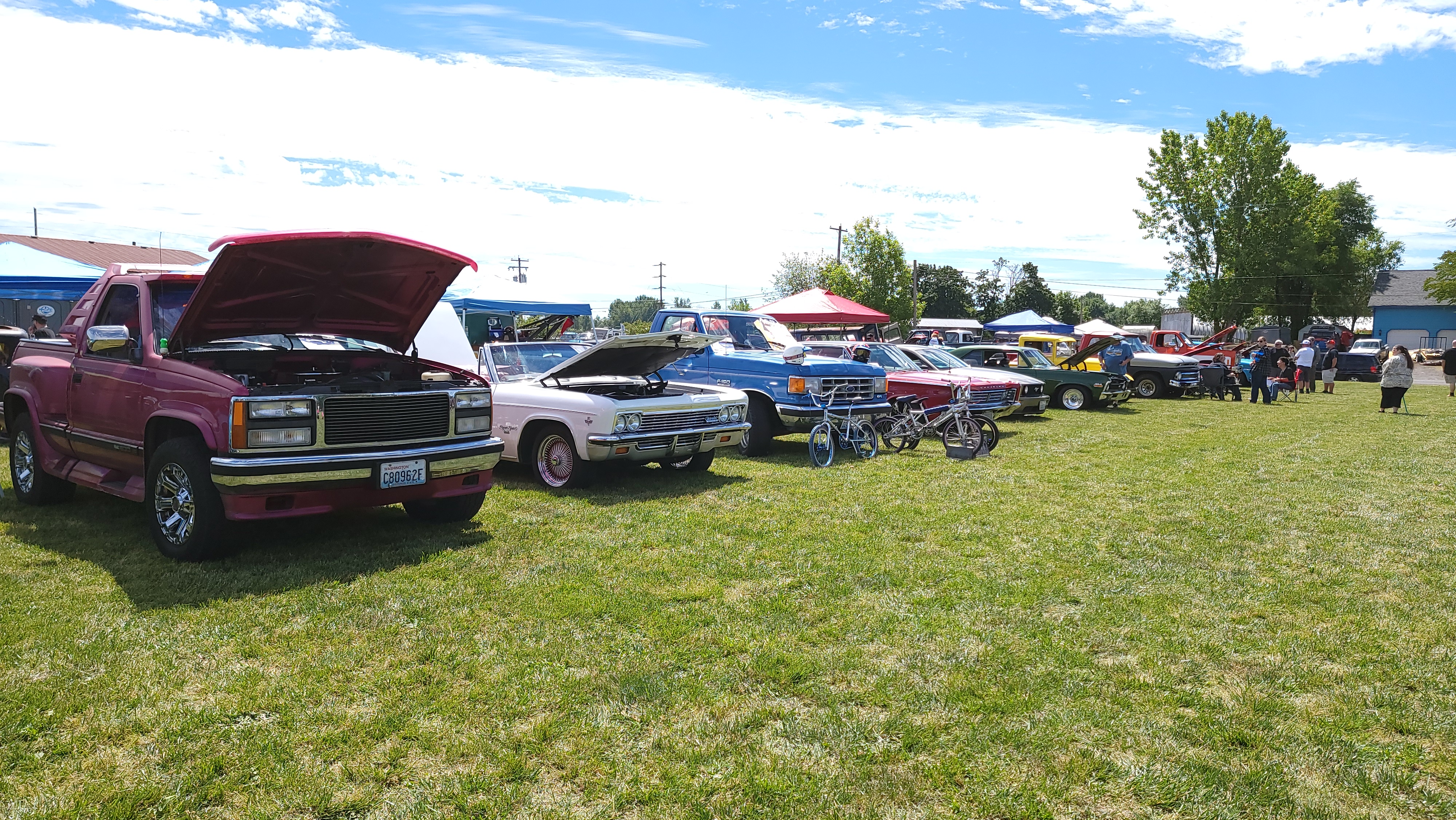
Autism, BMX, and Hot Rods 


There was a great turnout for the 1st annual BMX and Car Show for the Lewis County Autism Coalition at the Veterans Memorial Museum.  Chip and his staff along with volunteers from many other supporters and the 

coalition did a great job hosting the show.  The band was cool, the booths had support information and handouts, the hot rods stood alongside the supportive people of the community and bmx bikes new and vintage filled the display spaces.  There was a neat hot wheel racing track to try by one of the cars.  The donated prizes were awesome too.  It will be great to grow this event in the future to expand the support and opportunities it may help to create for the autistic community, and the awareness it brings to the area.


Latest Track

Bandzoogle's Music feature allows you to sell your albums and tracks - and we never take a percentage of your sales. Choose from set prices, free downloads, or even give away a track in exchange for a mailing list signup!

Shows

Our Events feature allows you to post your upcoming concerts and events on your website in a calendar or list view. The Pro plan even lets you sell tickets directly through your website!